Harvard Blog

Sample Page

Author: admin

  • How to Improve Test Preparation Skills

    How to Improve Test Preparation Skills

    Preparing for a test can feel stressful, especially TG88 when you have a lot of material to study and limited time. However, strong test preparation skills can make the process easier, more organized, and more effective. Whether you are studying for school exams, college entrance tests, professional certifications, or workplace assessments, learning how to prepare properly can improve your confidence and performance.

    This article explains practical ways to improve test preparation skills, manage study time, reduce anxiety, and achieve better results.

    Understand the Test Format

    One of the first steps in effective test preparation is understanding the format of the exam. Before you begin studying, find out what type of questions will appear on the test. Will it include multiple-choice questions, essays, short answers, problem-solving tasks, or oral responses?

    Knowing the format helps you study in the right way. For example, if the test includes essay questions, you should practice organizing your ideas and writing clear responses. If the test is mostly multiple choice, you should focus on recognizing key concepts, definitions, and details.

    You should also learn about the time limit, number of questions, grading system, and topics covered. This information allows you to create a focused study plan instead of wasting time on less important material.

    Create a Study Schedule

    A study schedule is one of the most useful tools for improving test preparation skills. Instead of studying everything at the last minute, divide your study material into smaller sections and review them over several days or weeks.

    Start by writing down the date of the test. Then, list all the subjects or topics you need to review. Assign specific topics to each study session. Make sure your schedule is realistic and includes breaks.

    For example, instead of writing “study science” on your schedule, write “review chapter 3 biology notes and complete 20 practice questions.” Clear goals help you stay motivated and measure your progress.

    Consistent study sessions are much more effective than cramming. Studying a little each day helps your brain absorb and remember information better.

    Use Active Study Methods

    Many students make the mistake of simply reading their notes over and over. While reading can be helpful, it is often not enough. Active study methods require you to think, recall, and apply information.

    Some effective active study techniques include:

    – Making flashcards

    – Taking practice tests

    – Summarizing notes in your own words

    – Teaching the material to someone else

    – Creating mind maps or diagrams

    – Answering review questions

    – Explaining concepts out loud

    Active learning improves memory because it forces your brain to work with the information. When you test yourself regularly, you can identify what you already know and what needs more review.

    Practice with Past Papers and Sample Questions

    Using past papers, mock exams, and sample questions is one of the best ways to prepare for a test. Practice questions help you become familiar with the test format and improve your speed.

    When you complete practice tests, try to copy real exam conditions. Set a timer, remove distractions, and avoid checking your notes. After finishing, review your answers carefully. Pay attention to the questions you missed and understand why you got them wrong.

    This method helps you discover weak areas before the actual test. It also builds confidence because you become more comfortable with the types of questions you may face.

    Improve Time Management

    Good time management is essential for successful test preparation. Many students know the material but struggle because they run out of time during the exam.

    To improve time management, practice answering questions within a time limit. Learn how much time you should spend on each section of the test. If you get stuck on a difficult question, move on and return to it later if time allows.

    During your study sessions, use techniques such as the Pomodoro method. This involves studying for 25 minutes, then taking a 5-minute break. After four sessions, take a longer break. This method helps maintain focus and prevents mental fatigue.

    Organize Your Study Materials

    Disorganized notes and materials can waste valuable study time. Before you begin preparing for a test, organize everything you need. This may include textbooks, class notes, worksheets, online resources, and practice tests.

    Create folders or digital files for each subject. Highlight important information, rewrite unclear notes, and make summary sheets for key topics. Organized materials make studying faster and less stressful.

    A clean study space is also important. Choose a quiet place with good lighting and minimal distractions. Keep only the materials you need on your desk. A focused environment can improve concentration and productivity.

    Take Care of Your Health

    Your physical and mental health play a major role in test performance. Poor sleep, unhealthy food, and stress can reduce your ability to concentrate and remember information.

    Make sure you get enough sleep, especially the night before the test. Sleep helps your brain store and organize what you have learned. Avoid staying up all night to study, as this can make you tired and less focused during the exam.

    Eat balanced meals, drink enough water, and include some physical activity in your routine. Even a short walk can reduce stress and improve your mood. Taking care of your body supports better learning and stronger test preparation skills.

    Reduce Test Anxiety

    Test anxiety is common, but it can be managed. Feeling nervous before an exam is normal, but too much anxiety can affect your performance.

    To reduce anxiety, prepare early and avoid last-minute cramming. Practice relaxation techniques such as deep breathing, stretching, or positive visualization. Remind yourself that one test does not define your worth or future.

    Positive self-talk can also help. Instead of thinking, “I’m going to fail,” say, “I have prepared well, and I will do my best.” Confidence grows when you develop good study habits and trust your preparation.

    Review and Adjust Your Study Plan

    Improving test preparation skills takes time. After each test, review your study methods and results. Ask yourself what worked well and what could be improved.

    Did you start studying early enough? Were your notes organized? Did practice questions help? Did you manage your time effectively during the test?

    Use your answers to improve your next study plan. Test preparation is a skill that becomes stronger with practice and reflection.

    Conclusion

    Learning how to improve test preparation skills can help you become a more Tác giả TG88 confident and successful student or professional. By understanding the test format, creating a study schedule, using active learning methods, practicing with sample questions, and managing your time wisely, you can prepare more effectively.

    Remember to stay organized, take care of your health, and manage test anxiety. With the right strategies and consistent effort, you can improve your performance and approach every exam with greater confidence.

  • Effective Ways to Enhance Student Participation

    Effective Ways to Enhance Student Participation

    Student participation is one of the strongest indicators of an active, meaningful, and successful learning environment. When students participate in Hubet class discussions, group activities, projects, and problem-solving tasks, they become more engaged, confident, and motivated to learn. However, encouraging participation can be challenging, especially when students feel shy, distracted, unprepared, or afraid of making mistakes.

    The good news is that teachers can use practical strategies to improve classroom engagement and create a learning space where every student feels encouraged to contribute. Below are effective ways to enhance student participation and build a more interactive classroom.

    Create a Positive and Inclusive Classroom Environment

    supportive classroom environment is the foundation of strong student participation. Students are more likely to speak up when they feel respected, valued, and safe from embarrassment. Teachers should make it clear that mistakes are part of the learning process and that every opinion matters.

    Simple actions such as greeting students warmly, learning their names, listening attentively, and acknowledging their contributions can make a big difference. It is also important to set clear expectations for respectful communication. When students know that their classmates will listen without judgment, they are more willing to participate in discussions and activities.

    Use Active Learning Strategies

    Active learning is one of the most effective ways to increase student engagement. Instead of relying only on lectures, teachers can involve students in activities that require thinking, discussion, and collaboration.

    Examples of active learning strategies include:

    – Think-pair-share activities

    – Group discussions

    – Role-playing

    – Problem-solving tasks

    – Case studies

    – Classroom debates

    – Hands-on experiments

    These methods encourage students to take responsibility for their learning. They also help students develop communication, teamwork, and critical thinking skills. By making lessons more interactive, teachers can keep students interested and involved.

    Ask Open-Ended Questions

    Questions play a major role in improving student participation. Instead of asking only questions with one correct answer, teachers should use open-ended questions that encourage deeper thinking. For example, instead of asking, “What is the definition of climate change?” a teacher might ask, “How do you think climate change affects daily life in different parts of the world?”

    Open-ended questions invite students to share opinions, make connections, and explain their reasoning. They also create opportunities for meaningful classroom discussions. Teachers should allow enough wait time after asking a question so students can think before responding.

    Encourage Small Group Collaboration

    Some students hesitate to speak in front of the entire class but feel more comfortable sharing ideas in small groups. Group work can help quieter students build confidence and participate more actively.

    To make group collaboration effective, teachers should assign clear roles such as leader, note-taker, presenter, or timekeeper. This ensures that each student has a responsibility and a reason to contribute. Group tasks should also be structured with clear goals and deadlines to keep students focused.

    Small group activities promote peer learning and help students develop social and academic skills. When students discuss ideas with classmates, they often gain new perspectives and a deeper understanding of the lesson.

    Connect Lessons to Real-Life Situations

    Students are more likely to participate when they understand the relevance of what they are learning. Connecting lessons to real-life situations makes the material more meaningful and interesting.

    For example, a math teacher can use budgeting, shopping discounts, or sports statistics to explain mathematical concepts. A science teacher can connect lessons to health, technology, or environmental issues. A language teacher can use real-world communication scenarios such as interviews, emails, or presentations.

    When students see how lessons apply to their lives, they become more motivated to ask questions, share experiences, and engage in learning activities.

    Use Technology to Boost Engagement

    Technology can be a powerful tool for improving student participation. Digital platforms, quizzes, polls, educational games, and discussion boards can make learning more interactive and enjoyable.

    Tools such as online polls allow every student to answer questions, including those who may not feel comfortable speaking aloud. Learning management systems and classroom apps can also give students opportunities to participate outside regular class time.

    However, technology should support learning goals rather than distract from them. Teachers should choose digital tools that encourage interaction, feedback, creativity, and collaboration.

    Provide Positive Feedback and Recognition

    Students are more likely to participate when they feel their efforts are noticed. Positive feedback helps build confidence and encourages continued involvement. Teachers should recognize not only correct answers but also effort, improvement, creativity, and thoughtful questions.

    Feedback can be as simple as saying, “That is an interesting point,” or “I appreciate how you explained your thinking.” Public recognition, participation points, certificates, or encouraging notes can also motivate students.

    It is important to be fair and consistent. The goal is not to pressure students but to create a classroom culture where participation is valued and celebrated.

    Offer Different Ways to Participate

    Not all students participate in the same way. Some enjoy speaking during discussions, while others prefer writing, drawing, presenting, or using digital tools. Offering multiple participation options allows more students to engage comfortably.

    Teachers can encourage participation through:

    – Written reflections

    – Exit tickets

    – Online discussion posts

    – Class presentations

    – Peer feedback

    – Visual projects

    – Question cards

    By providing different opportunities, teachers can include students with diverse personalities, learning styles, and confidence levels. This makes classroom participation more inclusive and effective.

    Set Clear Goals and Expectations

    Students need to understand what participation means and why it matters. Teachers should explain expectations clearly at the beginning of a course or lesson. Participation may include asking questions, listening actively, joining group work, completing tasks, or sharing ideas.

    Clear rubrics or guidelines can help students understand how their participation will be evaluated. When students know what is expected, they are more likely to take part actively and responsibly.

    Build Student Confidence Over Time

    Improving student participation does not happen overnight. Some students need time to develop confidence. Teachers should begin with low-pressure activities and gradually introduce more challenging participation tasks.

    For example, students can first write their ideas privately, then share with a partner, then speak in a small group, and eventually present to the class. This step-by-step approach helps reduce anxiety and supports steady growth.

    Patience, encouragement, and consistency are key. When teachers create repeated opportunities for success, students become more confident and willing to participate.

    Conclusion

    Enhancing student participation requires more Đăng ký Hubet than simply asking students to speak up. It involves creating a positive classroom environment, using active learning strategies, encouraging collaboration, and offering different ways for students to contribute. By connecting lessons to real life, using technology wisely, and providing positive feedback, teachers can increase classroom engagement and improve learning outcomes.

    When students participate actively, they become more confident, curious, and responsible learners. A classroom with strong student participation is not only more energetic but also more effective in helping students achieve academic success.

  • Agricultural Innovations Improving Food Production

    Agricultural Innovations Improving Food Production

    Agriculture is changing faster than ever before. As the global population grows, farmers must produce more food while using fewer resources, protecting the environment, and adapting to climate change. Fortunately, modern agricultural innovations are improving food production in powerful ways. From precision farming and artificial intelligence to improved seeds and vertical farms, new technologies King88 are helping growers increase yields, reduce waste, and build more sustainable food systems.

    The Need for Innovation in Agriculture

    Food production faces many challenges. Climate change is causing more droughts, floods, heat waves, and unpredictable growing seasons. Soil degradation, water scarcity, pests, and rising input costs also make farming more difficult. At the same time, demand for food continues to rise.

    Agricultural innovations help solve these problems by making farming more efficient and resilient. Instead of relying only on traditional methods, farmers can now use data, automation, biotechnology, and sustainable practices to improve productivity. These tools do not replace farmers; they support better decisions and more effective farm management.

    Precision Agriculture and Smart Farming

    Precision agriculture is one of the most important innovations improving food production. It uses technology such as GPS, sensors, drones, and satellite imagery to monitor fields in detail. Farmers can see which parts of a field need water, fertilizer, or pest control and apply resources only where they are needed.

    This approach saves money and reduces environmental impact. For example, instead of spreading fertilizer evenly across an entire field, a farmer can apply the right amount to specific areas. This improves crop health, reduces runoff, and increases yields.

    Smart farming systems also collect real-time data about soil moisture, temperature, crop growth, and weather conditions. With this information, farmers can make faster and more accurate decisions. As a result, precision agriculture supports higher food production while conserving resources.

    Drones and Satellite Technology

    Drones are becoming valuable tools in modern agriculture. They can fly over fields and capture high-resolution images that reveal crop stress, disease, pest damage, or irrigation problems. These issues are often difficult to detect from the ground until they become serious.

    By identifying problems early, farmers can take action before crops are lost. Drones can also help with planting, spraying, and field mapping. In some regions, drone technology is especially useful for large farms where monitoring every acre manually would take too much time.

    Satellite technology offers similar benefits on a larger scale. Satellites can track crop development, soil conditions, and weather patterns across entire regions. This information helps farmers, governments, and food companies plan more effectively and respond to risks such as drought or disease outbreaks.

    Artificial Intelligence in Food Production

    Artificial intelligence, or AI, is transforming agriculture by analyzing large amounts of data quickly. AI systems can predict crop yields, detect plant diseases, recommend irrigation schedules, and even guide farm machinery.

    For example, AI-powered platforms can combine weather forecasts, soil data, and crop information to suggest the best time to plant, water, or harvest. This improves efficiency and reduces losses. AI can also help farmers identify pests or diseases from photos taken with a smartphone or drone.

    In livestock farming, AI can monitor animal health, feeding patterns, and movement. Early detection of illness helps farmers improve animal welfare and reduce losses. As AI becomes more accessible, it will continue to play a major role in improving food production.

    Improved Seeds and Biotechnology

    Seed innovation is another key factor in increasing agricultural productivity. Scientists are developing crop varieties that grow faster, resist disease, tolerate drought, and produce higher yields. These improved seeds help farmers grow more food in challenging conditions.

    Biotechnology can also support food production by creating crops that are more resistant to pests or environmental stress. For example, drought-tolerant crops can survive with less water, which is essential in regions facing water shortages. Disease-resistant crops reduce the need for chemical treatments and help protect harvests.

    Gene editing tools, such as CRISPR, are opening new possibilities for agriculture. They allow scientists to improve specific crop traits more precisely than traditional breeding methods. This could lead to more nutritious, resilient, and productive crops in the future.

    Vertical Farming and Controlled Environment Agriculture

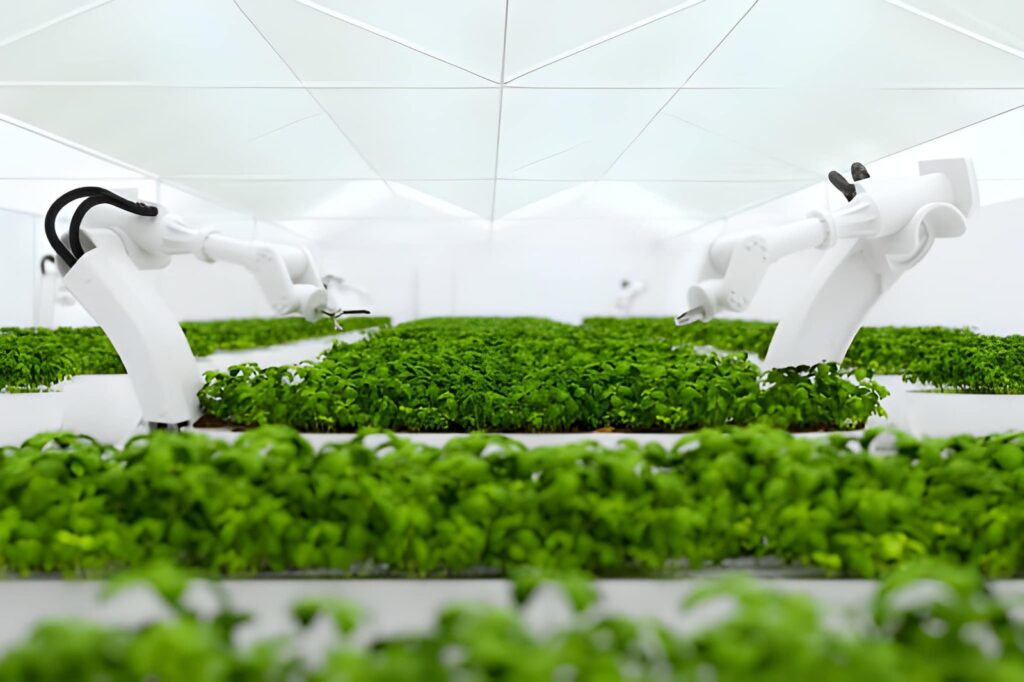
    Vertical farming is an innovative method of growing crops indoors in stacked layers. These farms use controlled environments with artificial lighting, temperature control, and hydroponic or aeroponic systems. Instead of soil, plants grow in nutrient-rich water or mist.

    Vertical farms can produce food year-round, regardless of weather conditions. They also use much less land and water than traditional farming. Because they can be built in or near cities, vertical farms reduce transportation costs and provide fresher produce to urban populations.

    While vertical farming is currently most common for leafy greens, herbs, and some vegetables, the technology continues to improve. As energy costs decrease and systems become more efficient, controlled environment agriculture may become an important part of future food production.

    Sustainable Irrigation and Water Management

    Water is one of the most important resources in agriculture. Many regions are experiencing water scarcity, making efficient irrigation essential. Innovations such as drip irrigation, smart sprinklers, and soil moisture sensors help farmers use water more wisely.

    Drip irrigation delivers water directly to plant roots, reducing evaporation and waste. Smart irrigation systems can automatically adjust watering schedules based on weather forecasts and soil conditions. This ensures crops receive enough water without overuse.

    Better water management increases crop yields and protects freshwater resources. It also helps farmers adapt to drought and climate uncertainty.

    Robotics and Automation on the Farm

    Farm robotics and automation are helping address labor shortages and improve efficiency. Robotic machines can plant seeds, remove weeds, harvest crops, and monitor fields. Automated tractors and harvesters can work with high accuracy, reducing time and fuel use.

    Weeding robots are especially useful because they can reduce the need for herbicides. Some machines use cameras and AI to distinguish crops from weeds and remove unwanted plants mechanically. This supports more sustainable farming practices.

    Automation does not eliminate the need for skilled farmers. Instead, it allows farmers to focus on planning, management, and problem-solving while machines handle repetitive tasks.

     The Future of Agricultural Innovation

    Agricultural innovations improving food production are essential for feeding the world sustainably. Precision agriculture, drones, AI, biotechnology, vertical farming, smart irrigation, and robotics are already making farms more productive and efficient.

    The future of agriculture will depend on combining technology with sustainable practices. Farmers, researchers, governments, and businesses must work together to make these innovations affordable and accessible. By embracing modern agricultural solutions, the world can produce more food, reduce waste, protect natural resources, Tác giả King88 and build a stronger food system for future generations.

  • Hello world!

    Welcome to WordPress. This is your first post. Edit or delete it, then start writing!