Agricultural Innovations Improving Food Production
Agriculture is changing faster than ever before. As the global population grows, farmers must produce more food while using fewer resources, protecting the environment, and adapting to climate change. Fortunately, modern agricultural innovations are improving food production in powerful ways. From precision farming and artificial intelligence to improved seeds and vertical farms, new technologies King88 are helping growers increase yields, reduce waste, and build more sustainable food systems.
The Need for Innovation in Agriculture
Food production faces many challenges. Climate change is causing more droughts, floods, heat waves, and unpredictable growing seasons. Soil degradation, water scarcity, pests, and rising input costs also make farming more difficult. At the same time, demand for food continues to rise.
Agricultural innovations help solve these problems by making farming more efficient and resilient. Instead of relying only on traditional methods, farmers can now use data, automation, biotechnology, and sustainable practices to improve productivity. These tools do not replace farmers; they support better decisions and more effective farm management.
Precision Agriculture and Smart Farming
Precision agriculture is one of the most important innovations improving food production. It uses technology such as GPS, sensors, drones, and satellite imagery to monitor fields in detail. Farmers can see which parts of a field need water, fertilizer, or pest control and apply resources only where they are needed.
This approach saves money and reduces environmental impact. For example, instead of spreading fertilizer evenly across an entire field, a farmer can apply the right amount to specific areas. This improves crop health, reduces runoff, and increases yields.
Smart farming systems also collect real-time data about soil moisture, temperature, crop growth, and weather conditions. With this information, farmers can make faster and more accurate decisions. As a result, precision agriculture supports higher food production while conserving resources.
Drones and Satellite Technology
Drones are becoming valuable tools in modern agriculture. They can fly over fields and capture high-resolution images that reveal crop stress, disease, pest damage, or irrigation problems. These issues are often difficult to detect from the ground until they become serious.
By identifying problems early, farmers can take action before crops are lost. Drones can also help with planting, spraying, and field mapping. In some regions, drone technology is especially useful for large farms where monitoring every acre manually would take too much time.
Satellite technology offers similar benefits on a larger scale. Satellites can track crop development, soil conditions, and weather patterns across entire regions. This information helps farmers, governments, and food companies plan more effectively and respond to risks such as drought or disease outbreaks.
Artificial Intelligence in Food Production
Artificial intelligence, or AI, is transforming agriculture by analyzing large amounts of data quickly. AI systems can predict crop yields, detect plant diseases, recommend irrigation schedules, and even guide farm machinery.
For example, AI-powered platforms can combine weather forecasts, soil data, and crop information to suggest the best time to plant, water, or harvest. This improves efficiency and reduces losses. AI can also help farmers identify pests or diseases from photos taken with a smartphone or drone.
In livestock farming, AI can monitor animal health, feeding patterns, and movement. Early detection of illness helps farmers improve animal welfare and reduce losses. As AI becomes more accessible, it will continue to play a major role in improving food production.
Improved Seeds and Biotechnology
Seed innovation is another key factor in increasing agricultural productivity. Scientists are developing crop varieties that grow faster, resist disease, tolerate drought, and produce higher yields. These improved seeds help farmers grow more food in challenging conditions.
Biotechnology can also support food production by creating crops that are more resistant to pests or environmental stress. For example, drought-tolerant crops can survive with less water, which is essential in regions facing water shortages. Disease-resistant crops reduce the need for chemical treatments and help protect harvests.
Gene editing tools, such as CRISPR, are opening new possibilities for agriculture. They allow scientists to improve specific crop traits more precisely than traditional breeding methods. This could lead to more nutritious, resilient, and productive crops in the future.
Vertical Farming and Controlled Environment Agriculture
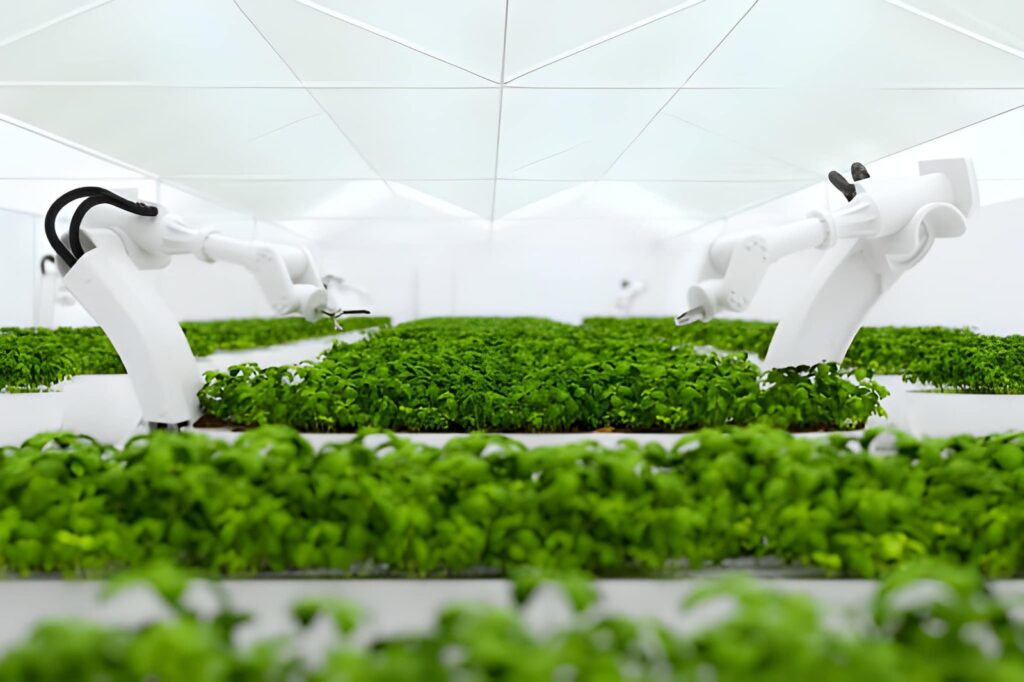
Vertical farming is an innovative method of growing crops indoors in stacked layers. These farms use controlled environments with artificial lighting, temperature control, and hydroponic or aeroponic systems. Instead of soil, plants grow in nutrient-rich water or mist.
Vertical farms can produce food year-round, regardless of weather conditions. They also use much less land and water than traditional farming. Because they can be built in or near cities, vertical farms reduce transportation costs and provide fresher produce to urban populations.
While vertical farming is currently most common for leafy greens, herbs, and some vegetables, the technology continues to improve. As energy costs decrease and systems become more efficient, controlled environment agriculture may become an important part of future food production.
Sustainable Irrigation and Water Management
Water is one of the most important resources in agriculture. Many regions are experiencing water scarcity, making efficient irrigation essential. Innovations such as drip irrigation, smart sprinklers, and soil moisture sensors help farmers use water more wisely.
Drip irrigation delivers water directly to plant roots, reducing evaporation and waste. Smart irrigation systems can automatically adjust watering schedules based on weather forecasts and soil conditions. This ensures crops receive enough water without overuse.
Better water management increases crop yields and protects freshwater resources. It also helps farmers adapt to drought and climate uncertainty.
Robotics and Automation on the Farm
Farm robotics and automation are helping address labor shortages and improve efficiency. Robotic machines can plant seeds, remove weeds, harvest crops, and monitor fields. Automated tractors and harvesters can work with high accuracy, reducing time and fuel use.
Weeding robots are especially useful because they can reduce the need for herbicides. Some machines use cameras and AI to distinguish crops from weeds and remove unwanted plants mechanically. This supports more sustainable farming practices.
Automation does not eliminate the need for skilled farmers. Instead, it allows farmers to focus on planning, management, and problem-solving while machines handle repetitive tasks.
The Future of Agricultural Innovation
Agricultural innovations improving food production are essential for feeding the world sustainably. Precision agriculture, drones, AI, biotechnology, vertical farming, smart irrigation, and robotics are already making farms more productive and efficient.
The future of agriculture will depend on combining technology with sustainable practices. Farmers, researchers, governments, and businesses must work together to make these innovations affordable and accessible. By embracing modern agricultural solutions, the world can produce more food, reduce waste, protect natural resources, Tác giả King88 and build a stronger food system for future generations.